A hundred hours in ten minutes: how AI gives boutique firms the edge
February 13, 2026

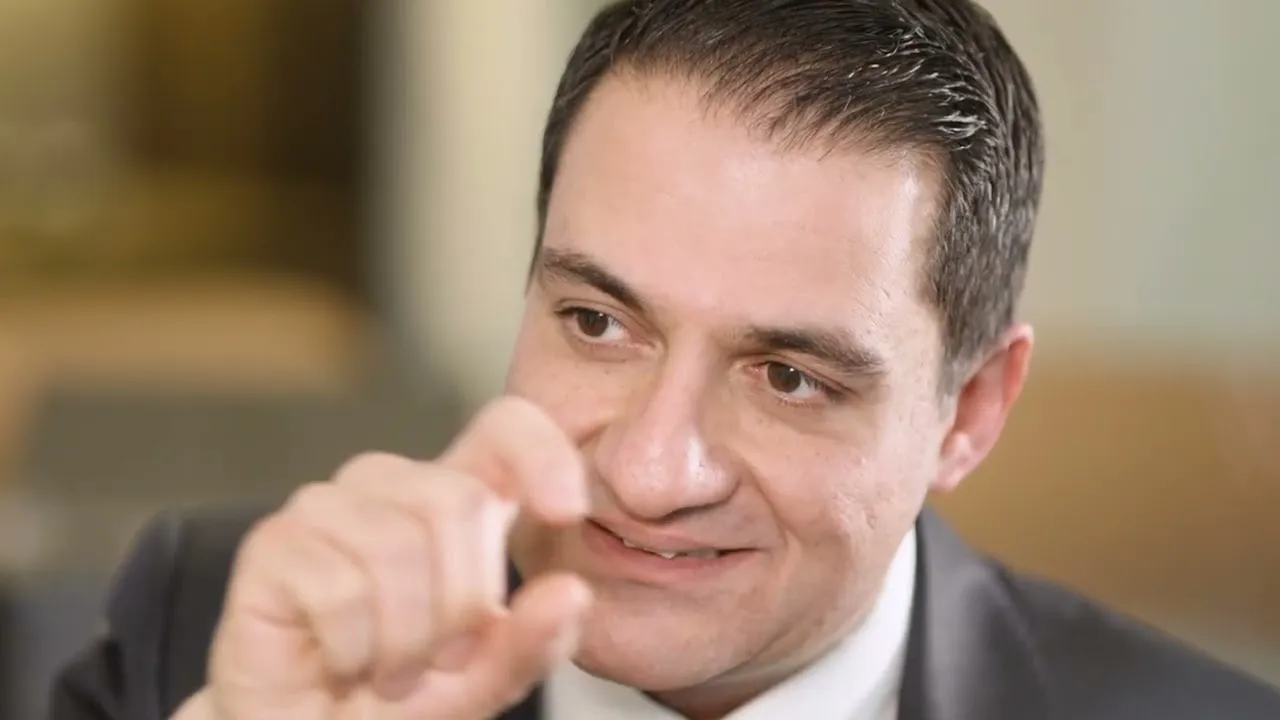
"We see ourselves as the Jedi Knights in Star Wars against the empire of big law. Andri is our Force that gives us our edge." When Roshi Sharma talks about his legal practice LawBeam, the image is striking. A small firm with six core staff scattered across the globe, taking on international giants. His weapon? Artificial intelligence.
From Blackberry to AI: the next revolution
Sharma began his career in 2002 at the traditional firm Slaughter and May. He remembers the arrival of the Blackberry as the first major technological shift. "It meant we were on 24/7, always reachable to our clients and partners. We could work from anywhere, all the time." The parallel with AI is striking. "The Blackberry let you be reachable 24/7. Now we have AI that can work for you 24/7. You can work around the clock and AI can simultaneously work around the clock."
In 2008, Sharma worked on one of the largest due diligence operations in history: saving RBS and Lloyds during the financial crisis. The weekend before the banks would fail, his team had to review hundreds of boxes containing thousands of documents. "We had a giant human pyramid of lawyers. At the bottom, trainees and paralegals reviewing physical paper documents. That information went to junior associates, who reported to senior associates, who passed it on to the partner." A labour-intensive process that today can largely be handled by AI.
He founded LawBeam in 2022, just before ChatGPT launched. The plan was ambitious: build a global rulebook containing all laws and regulations, powered by a proprietary AI system. "When ChatGPT hit, it showed us how far they were ahead. Light years." The team switched to existing technology and experimented with ChatGPT, Claude and Grok. Then Andri appeared on the radar.
Sharma's interest in AI and law was sparked by Richard Susskind's book Tomorrow's Lawyers. "A compelling case was made about how AI will disrupt the traditional law firm model. The case being that you need to do more for less. Laws and regulations become increasingly complex. Clients want more from their lawyers, but they don't want to pay the exorbitant fees they've historically paid. There's real tension. And using AI breaks that model."
Near-zero hallucinations, complete transparency
A client from the technology sector tipped Sharma about Andri eighteen months ago. The difference from the tech giants was immediately apparent. "The team behind Andri is small and boutique, just like LawBeam. They've been built for lawyers." What struck Sharma most was the quality. "There were zero errors. With other large language models, we invariably faced hallucinations. Once we were doing research on crypto airdrops, where tokens are dropped directly to your wallet. The model started talking about helicopters. It obviously confused airdrops with helicopters." Those are Sharma's words; we deliberately keep our own claim at near-zero.
That reliability is crucial in a sector built on trust. "We have a very demanding client base that moves fast. We can't make mistakes. You can't use inferior AI tools and then say, blame it on the AI. We need something that's battle-tested and ready." But what truly distinguishes Andri is its transparency. Where other tools operate as black boxes, Andri shows exactly what steps it takes. "If you ask an associate how they got to an answer, you want to see their working. Andri does that for you. You can interrogate the approach it's taking."
Sharma compares it to the maths teacher asking: show me your working. That transparency makes Andri more than just a tool. It's a partner in the legal process.
Searching hundreds of conversations in minutes
Andri's power becomes most evident in a concrete case. Two parties were embroiled in a dispute about product quality. Sharma needed to determine whether the quality had ever been formally accepted. The problem: there had been hundreds of meetings, all recorded and transcribed. Weekly meetings, monthly updates, ad hoc discussions. A treasure trove of information, but impossible to review manually.
"To read every single transcript of every single meeting throughout the year would take a very, very long time. That would bring us back to 2008." The costs for the client would be too high. With the client's consent, Sharma uploaded all transcripts into Andri. "Within five minutes, we were getting quality outputs. We were trying to find whether the parties had accepted the quality, whether they praised the product or hated it. It was able to pick out specific sentences we needed to make our case."
The result was staggering. "It would have taken us 100 hours. That was condensed down to 10 minutes." But more importantly, without AI, this service wouldn't even exist. "We just wouldn't have gone that way. That's where the real power comes in. You're creating new types of advice at a fraction of the cost and at speed."
The client was impressed. "There's no way you can remember every single conversation you had over the course of a year, whereas Andri could just pick it out."
Trust and transparency
Sharma is acutely aware of the sensitivity around AI and privacy. For routine matters, he doesn't always need explicit permission, but sensitive cases with personal data are different. "If we're uploading their own conversations, their personal data, then it's more sensitive. Then we have that conversation." All clients know that LawBeam uses AI in delivering legal services. Because they're technology-focused clients, they support it. "They want fast advice, cost-effective advice and smart advice. AI just makes us better lawyers. It enables us to give a superior service at speed and at lower cost."
AI is fully integrated within the team as well. LawBeam has six core staff and a flexible network of lawyers in Canada, India, Dubai and Hong Kong. Everyone uses Andri. The team receives regular training from Andri to optimise their use of the tool. "The nice thing about working with a company like Andri is that they can have those sessions with you. You can't just call Google."
When hiring new lawyers, AI is central. "We want junior lawyers that are embracing technology, that are excited about using AI. If you don't have that curiosity, if you don't care about how you can operate at maximum capacity, then that's not a good place to be." Even his own wife, a very senior lawyer, remains sceptical about AI in professional services. "I haven't shown her Andri yet. But I've been trying."
The future of legal services
Sharma looks ahead to a future where the traditional pyramid structure of law firms disappears. "You'll see disruption at the lower end: trainees, junior associates, perhaps at some point senior associates as well. The whole hourly billing model that law firms are built on gets wholly disrupted." He predicts more fixed-fee billing and value billing, because not everything is tied to the hour anymore.
What remains is the human element. "In a crisis or emergency scenario, you want to be able to reach out to your trusted advisor. Probably on the phone. You want to speak to someone you trust." The client cares less about how the work is done, as long as they get the right answer. "That trusted advisor piece will stay because that's core to how humans interact with each other. But the actual work, I think that's going to be fundamentally different."
For boutique firms, he sees major opportunities. "We can't pretend that we can compete with the likes of Kirkland or Clifford Chance. But our key insight is that laws and regulations are just information, and information is content. For the first time, we have a type of intelligence that can not just review or analyse that content, but understand it and advise on it."
That technology makes LawBeam competitive. "One lawyer can match up with 100 lawyers somewhere else because of superior technology." In a short time, the firm grew from zero to 100 clients. "We're doing phenomenal business off the back of using AI. It's at the heart of our operations."
Advice to other firms
His message to other boutique firms is clear. "Do it sooner rather than later. If you want to stay relevant in the practice of law, you need the most cutting-edge AI tools." For him, Andri has proven to be a phenomenal partner. "If you want to help your clients win, you should be using Andri because that helps you get better advice faster, cheaper."
The tools keep getting better and LawBeam keeps growing. "We're using it more and more all the time. And it's enabled LawBeam to grow rapidly because we're leveraging that technology." What began with a Blackberry making lawyers reachable 24/7 ends with AI working 24/7. The revolution cannot be stopped.
"We're competing with major firms and advising very big clients around the world using technology. That's a breakthrough for the legal market."
Curious what Andri could do for your firm? Try Andri and see for yourself.
Read also: what we learned from our pilot with Blokziel, the first case won using Andri, what agentic AI actually means in law, and how we handle your documents.