Champions League quality in denim: how Dutch boutique LAWFOX punches above its weight with Andri
June 2, 2026

Six people. No administrative staff. No suits. And yet LAWFOX serves a client base of tech companies, software developers and digital entrepreneurs you would normally expect at a top Amsterdam firm. "Champions League quality in denim" is how founder Wouter Dammers describes the firm himself: top-level lawyering, without the fuss. The secret? A combination of deep technical fluency and a willingness to treat AI as a serious part of the practice, not a novelty. "It feels like there's a whole team behind you," says Dammers. "Just one that never sleeps."
Walk into LAWFOX and you notice instantly that this is not a standard law firm. Everyone wears jeans. The atmosphere is that of a tech company that happens to give legal advice. That is exactly the point. Dammers founded the firm in late 2013 because he saw a gap in the market: lawyers who not only know IT law but also understand the technology underneath it. "When I'm working on a SaaS contract, I'm also thinking about the API hanging off it. You need to understand how that works to give good advice." He calls himself, with a smile, a translation bureau. Someone who makes technology intelligible for judges and law intelligible for programmers.
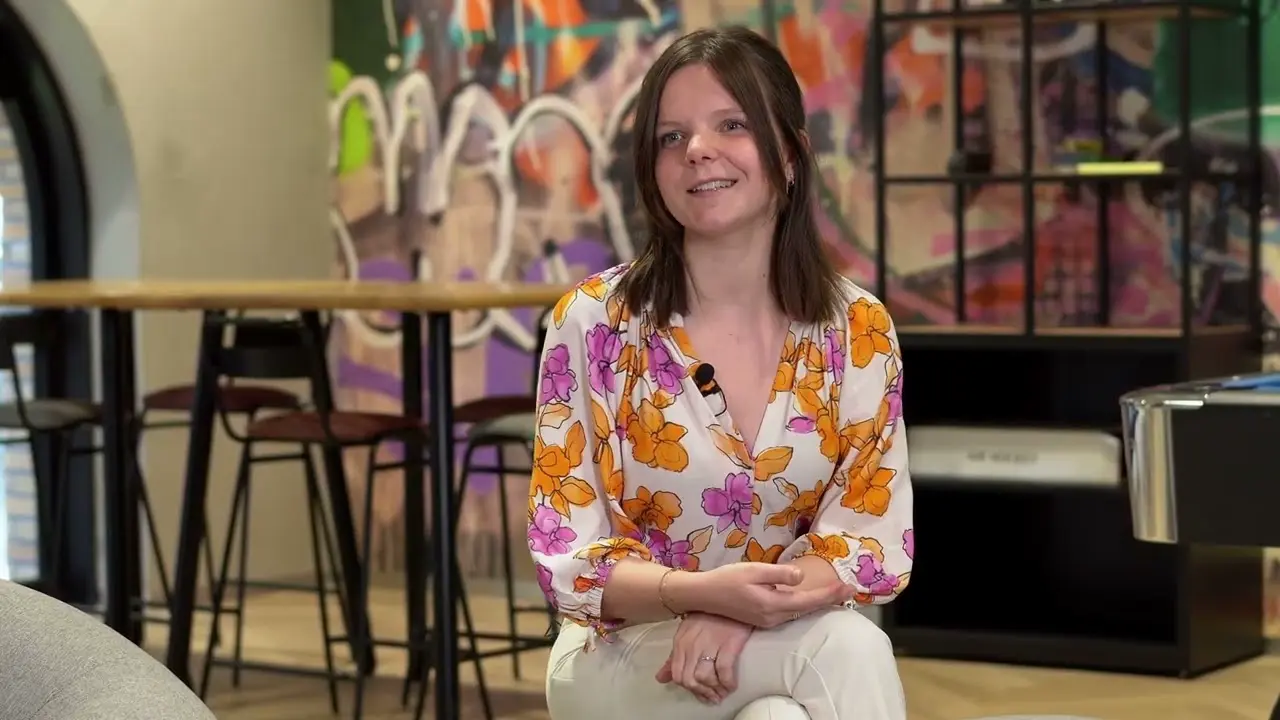
Alongside Dammers, Dutch advocates Joe Jay de Haas and Iris van Beers work at LAWFOX. De Haas came in via media law and the Amsterdam financial district, Van Beers from intellectual property. What binds them: a shared conviction that legal practice can be more accessible without sacrificing quality. "Our clients are not waiting for someone in a stiff suit to tell them how to do things," says De Haas. "They want someone they can have a normal conversation with."
Three tools at once, then see which wins
When ChatGPT appeared in late 2022, the firm's first reaction was, honestly, disappointment. Van Beers remembers that the answers to legally complex questions did not reassure her. De Haas had already experimented with translation software at a previous firm and was hoping for a similar leap for law. It did not arrive.
But LAWFOX would not be LAWFOX if they left it at that. The firm decided to test multiple legal AI tools in parallel, in a way you would expect at a tech start-up more than at a law firm. Everyone kept a prompt diary. The same questions went to three different systems. Then a comparison per answer: where are the nuances, what is correct, what is not. "It took quite a bit of time," says De Haas, "but it gives you the best comparison of which tool consistently delivers the best output."
It was Van Beers who put Andri forward. She knew one of the founders from her student days and had followed the platform's development closely. After the comparative test round, Andri came out on top. Not on a hunch, but on structured benchmarks. Dammers is clear about it: "If there is technology that simply makes things better for our clients, we use it. But then we look at every safeguard that needs to be in place."
A settlement that would not have happened without Andri
In daily practice, LAWFOX uses Andri broadly. Dammers uses the platform for quotes: for every new enquiry he asks Andri for an initial assessment of the legal aspects, risks and cost estimate. "That takes an enormous amount of time off my hands." Case file building runs through a dedicated email address per matter. Everything you send to it is automatically placed in the right file. Even poorly legible PDF photos are read accurately.
For legal research, the platform delivers a shortlist of relevant case law, which the advocate then works with. "Going through Rechtspraak.nl is no longer necessary. Or at least not nearly as much as it used to be." What appeals to Dammers is that Andri shows its reasoning. You can follow how the system arrives at an answer, and you see it if something is off. "That's really excellent, because if it makes a mistake, you see it in the process. You know where to steer."
The strongest example came just after Christmas. A client had just lost a preliminary injunction in a software dispute and came in for a second opinion. Dammers asked Andri general questions about the situation and received a suggestion about legislation that neither the first-instance lawyer nor the judge had considered. That ultimately led, with the threat of appeal in the background, to a settlement that left the client very satisfied. "We could work extremely efficiently," says Dammers. It is exactly the kind of result a small firm uses to make the difference.
Lawyer in the loop
LAWFOX is open with clients about its use of Andri. In the firm's standard working method document, it is set out in black and white. Dammers goes a step further: he encourages clients to send in complete files. "Just send me the whole shoebox. I'd rather receive too much than too little. Because I'll put Andri on it and move through the file very fast." For SME clients, who do not always have the biggest budget, that is immediately noticeable. "Where I would normally need four hours, I now need half an hour to actually give legal advice."
But the firm also recognises the limits very clearly. The principle is simple: nothing leaves LAWFOX without human review. Van Beers illustrates that in her copyright work, where visual comparisons are central. She lets Andri build the legal framework but deliberately keeps the visual judgement in her own hands. "The tool breaks it up into small pieces. But it cannot think: this gives the same feel, this reminds me of. That just doesn't work." So she deliberately leaves space in her prompt for that, so she can fill it in herself.
And what about the often-heard fear that AI undermines the learning capacity of junior lawyers? De Haas, himself still at the start of his career, sees it precisely the other way around. "As a junior lawyer, with a tool like Andri you essentially have a junior to delegate to. You can focus on substance faster rather than on typing up a timeline." Van Beers adds: "Your work simply becomes more enjoyable. You can concentrate on the things that really matter."
On Dammers' LinkedIn profile, it says he is working towards a world in which his firm is redundant by 2055. Asked whether AI brings that date forward, he sticks to his timeline. But he finds the thought experiment itself essential. "What is still the added value of a lawyer when AI can facilitate so much? Every lawyer needs to ask themselves that question." And then, with the kind of plainness that fits a firm in jeans: "This Andri is probably the worst Andri you'll ever use. Because next week it'll be better again."
See what Andri can do for your practice
Read also: how LawBeam compresses a hundred hours into ten minutes, how Blokziel saves eight hours a week, and the first Dutch court case prepared with AI.